
Air CargoCentre™ III and AirFreight & LogisticsCentres™
First air cargo facility in America with parking space specifically designed to accommodate the Airbus A380 aircraft.
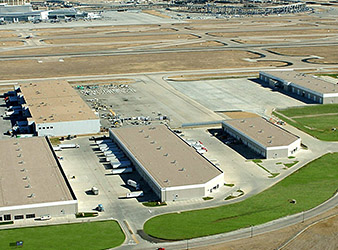
Air CargoCentre™ III and AirFreight & LogisticsCentres™ - Dallas / Fort Worth Texas
With its massive wingspan and weight the Airbus A380 dwarfs other freighter aircraft currently in use, and no airport in the United States had air cargo facilities with parking spaces designed to support it.
Not until recently, that is.
DFW Airport Hosts First Air Cargo Facilities in the U.S. to Support Futuristic Airbus A380 Aircraft
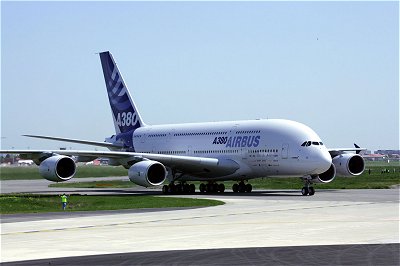
The new Airbus A380 aircraft, a marvel of aviation engineering, has a wingspan of 262 feet, a length of 239 feet and a cargo payload of 150 tons. The first commercial freighter designed with three full cargo decks, this long-range superjumbo aircraft is designed to revolutionize large-scale international and domestic shipping when it enters into commercial service.
While this futuristic aircraft provides remarkable opportunities for the commercial aviation industry, it also presents remarkable challenges, most notably those resulting from its size. With its massive wingspan and weight the A380 dwarfs other freighter aircraft currently in use, and no airport in the United States had air cargo facilities with parking spaces designed to support it.
Not until recently, that is.
Trammell Crow Company's CargoCentre™ III and AirFreight & LogisticsCentres™ complex at Dallas / Fort Worth (DFW) International Airport may be the most significant air cargo project to be built un the United States. With this four-building complex, DFW became the first airport in the United States to offer an air cargo facility with parking space specifically designed to accommodate the Airbus A380 aircraft.
The complex includes the 116,000 SF Air CargoCentre™ III and AirFreight & LogisticsCentres™ 1, 2 and 3 (sized 114,000, 113,000 and 54,000 SF respectively).
Air CargoCentre™ III is designed to support parking for three Boeing 747-400F or two Airbus A380 aircraft with 17" thick concrete paving in the apron area. It features a 125-foot clear span bay for material handling, with mezzanines at both entrances, and a "pass-through" design to allow workers to unload aircraft on one side of the facility and transfer cargo directly through to trucks parked on the other side. The intelligent design and A380 aircraft support provide for a level of operating efficiency that no other facility in the country can match. An in-ground refueling system at the facility further enhances its operating efficiency.
Air CargoCentre™ III is connected to the three Airfreight & Logistics Centres™ by way of an onsite private road that was built during construction of the complex. The AirFreight & LogisticsCentres™ are designed to support single or multiple third-party logistics providers and shippers. The buildings have access to the aircraft apron area via a security gate. This layout integrates the Airfreight & Logistics Centres™ with the airfield, without placing the buildings physically inside the secured area. The design improves airport security and increases operational efficiencies, while reducing truck traffic and congestion at the airport.
General Contractor Bob Moore Construction was the construction company chosen to tackle this challenging and historic tilt-up concrete project. Managing the project for the construction company was Senior Project Manager Kyle Whitesell.
Concrete Construction in a Difficult Environment
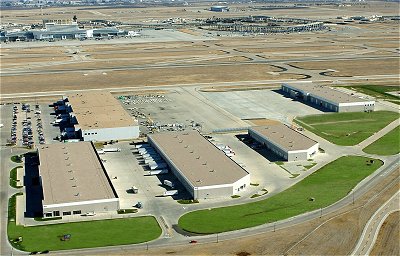
Few environments present a wider range of regulatory requirements, safety and security considerations and other complexities to a construction company than a major commercial airport that supports hundreds of flights every day. The CargoCentre™ III and AirFreight & LogisticsCentres™ complex was constructed at the intersection of two runways in one of the busiest airports in the country, with an active air cargo facility on the third border of the tract. This setting forced the construction company to employ creative construction methodology in response to a wide range of safety, environmental and security challenges.
To address the safety matters resulting from the close proximity to the operational taxiways and runways, Whitesell and his construction team had to pay close attention to the safety of construction crews, airline employees and passing cargo aircraft as well. Significant measures were necessary to ensure the safety of work crews and to protect taxiing aircraft from foreign object damage ("FOD") while this phase of the construction took place. Whitesell's team developed a procedure referred to as a "pullout process" when working in proximity to the taxiway.
The pullout process was as follows:
- The procedure started with daily communications between Bob Moore Construction employees and the aircraft schedulers in the Logistics Department for CargoCentre™ II to coordinate arrival schedules and planned construction activities.
- Concrete contractors and other work crews received a daily briefing on hazards, flight schedules and pullout program procedures.
- While construction work was taking place, flagmen for each subcontractor stood by in the work area to watch for approaching aircraft making an unscheduled approach.
- As the time neared for a scheduled aircraft arrival, workers secured all materials, tools, equipment and other foreign objects close to the taxiway and moved behind a safety barrier.
- CargoCentre™ II Logistics instructed aircrews who were operating taxiing aircraft to stop engines on the side of the aircraft closest to the construction work, to avoid pulling debris into the engines' air intakes, until the aircraft had taxied safely into the CargoCentre™ or away from the construction area.
- Once the aircraft had passed the work area and taxied into the CargoCentre™, the flagmen could direct workers back into the construction area.
As additional protection for aircraft, work crews regularly performed FOD walks to find and remove any loose items from the work area that may be pulled into the engines of taxiing aircraft.
Whitesell and his construction team faced other safety challenges as well. Existing fuel mains that crossed the 35-acre tract for the complex also required special attention during the project. Long stretches of shallow jet fuel lines passed under the planned locations for the buildings and the new aircraft apron. Each time work crews planned to work near or over one of the lines, the contractor's employees hand-located the lines and received approval to proceed from airport personnel before work would commence. Given the quantities and volatility of the fuel transported through these lines, this process was critical to stay within compliance of airport regulations and keep workers and property safe.
In Post-9/11 America, security is always a matter of great concern and sensitivity at or near airports. The CargoCentre™ III and AirFreight & LogisticsCentres™ complex straddles the boundary of the Airport Operating Area (the controlled portion of the airport where people have direct access to the aircraft, also called the "AOA"). This project effectively altered the perimeter of DFW Airport, and for this reason Bob Moore Construction was required to follow strict protocols for maintaining the integrity of the secured AOA, as established by the Department of Homeland Security and other agencies, even as construction took place.
Access to the AOA was strictly controlled during construction. A temporary gate in the AOA fence was coordinated and approved through DFW Airport officials and governing federal agencies, and was constantly manned with a Department of Public Safety guard to ensure that security was not compromised at any time. This temporary gate was maintained throughout the project until the permanent gate was installed and staffed with airport security personnel.
As part of the project, work crews installed a fuel system for CargoCentre™ III. This included the laying of pipes and other work along an active taxiway inside the AOA. This part of the project combined the challenges of maintaining security protocols and protecting work crews and aircraft simultaneously.
All work crew employees involved with this phase of the project were identified and badged, and were escorted into the AOA with 100% supervision from Bob Moore Construction employees. All workers entering the AOA received daily Pre-AOA Briefings to discuss flight schedules, safety procedures and the hazards inherent to working in close proximity of taxiing aircraft. While work crews operated inside the AOA, flagmen for each subcontractor stood watch for unscheduled aircraft. While in the AOA, workers followed pullout processes when taxiing aircraft were in the vicinity. Workers maintained strict standards for securing loose materials and tools to ensure the wind did not pull any items from the construction area into the taxiway, and performed frequent "FOD Walks" to pick up any loose materials that could damage aircraft.
Along with safety and security, environmental protection also created unique challenges for the construction team. Given the volume and volatility of the chemicals inherent to an air cargo facility (particularly jet fuels), storm water pollution prevention is critical. Federal regulations mandate exacting standards for controlling and cleaning storm water run-off. As a result, the complex includes two underground oil / water separators. Each separator is 40 feet long with a 20,000 gallon capacity, and is designed to clean storm water run-off after it flows through the retention ponds. Each retention pond contains a multi-layer filter system of porous gravel and sand to initially screen contaminates prior to the water entering the oil / water separator filter system.
The Construction Company Meets the Challenges
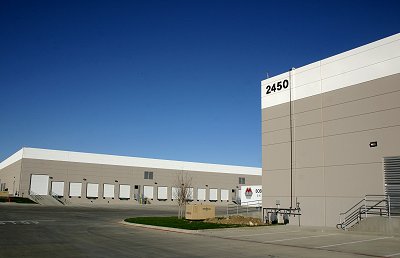
In spite of the challenges presented by the dangerous work environment and federal regulatory requirements, Project Manager Whitesell and Bob Moore Construction delivered the CargoCentre™ III and AirFreight & LogisticsCentres™ complex on schedule and with no worker injuries, aircraft damage or penalties due to security violations. In April, 2006 this historic tilt-up concrete project earned the coveted Summit Award for Construction Excellence from AGC.
The complex was built to meet the exacting standards established by the Trammell Crow Company for any building bearing the trademarked CargoCentre™ or AirFreight & LogisticsCentre™ names and to conform to the regulatory requirements of the Environmental Protection Agency, the Department of Homeland Security, the Transportation Safety Administration and other federal and state agencies. As a result, the new CargoCentre™ or AirFreight & LogisticsCentres™ complex fits seamlessly into the working flow of DFW Airport and provides a capability for freighter aircraft support unmatched by any other airport in the United States. The complex gives DFW Airport an unparalleled position of stature in the international shipping community and will become a centerpiece for the airport's future domestic and international air cargo shipping business.
The concrete contractor Bob Moore Construction company continues to deliver construction projects throughout Texas and across the United States, and celebrated its 65th anniversary in 2011. Their company website is GeneralContractor.com.